2026 – 2028 Leadership Team
Krista Collier-Jarvis
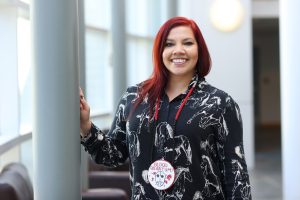
Krista is our Principal Investigator and University Liaison. She is a member of the Mi’kmaq First Nation and a third-generation residential school survivor, and she teaches Indigenous literatures, American literature, popular culture, and climate fiction. Her doctoral research focused on zombie narratives to create an Indigenous-infused, multispecies approach to contagion and climate change. Her work has appeared in Humanities, Canadian Jewish Studies, Scaffold, The Palgrave Handbook of the Zombie, American Gothic Studies, The Cambridge Companion to World-Gothic Literature, Ecospheres, and Global Indigenous Horror. In 2025, she completed a Horror Writing residency at the Banff Centre for Arts under the mentorship of Shane Hawk (Cheyenne & Arapaho). When it comes to the Two-Eyed Seeing Program, she is tasked with overseeing, with our Program Coordinator, grant applications, reporting, university administration, and public relations.
Tara Pride
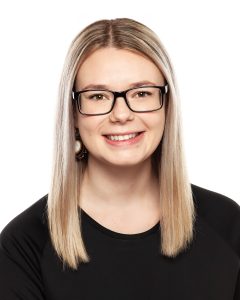
Tara Pride, an Assistant Professor in the School of Occupational Therapy at Dalhousie University and member of Sipekne’katik First Nation with mixed Mi’kmaw and settler ancestry. Her research focuses largely on Indigenous health and wellbeing, Indigenous mentorship, Indigenous community engaged and driven research, and advancing Indigenous excellence in occupational therapy. She has a keen interest on working collaboratively with Indigenous post-secondary students to determine mentorship and training needs, particularly for health professions students. Broadly, she is interested in research collaborations with Indigenous peoples and communities to support community-led and driven research that meets their needs and goals. She is one of the co-directors of the Indigenous Occupational Therapy Collective of Canada, which aims to create a more inclusive decolonial space that is built from Indigenous epistemologies and pedagogies, and the NPI of the Wabanaki-Labrador Indigenous Health Research Network, which contributes to advancing Indigenous health and well-being in the Atlantic region through community-identified priorities.
Ann Sylliboy
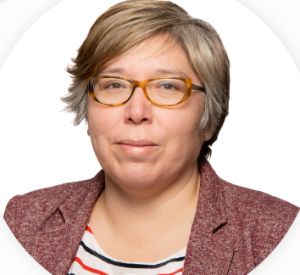
Ann Sylliboy is from Unama’ki living in Essisoqnik with her three children, partner and german shepherd.
She is a Mi’kmaw leader, educator and advocate for Indigenous students and communities across Nova Scotia. She has spent more than a decade supporting Mi’kmaw learners as Post-Secondary Consultant with Mi’kmaw Kina’matnewey, helping students navigate university and college to find the support they need and succeed in spaces that haven’t always been easy to enter. Other examples of her past and present work includes, working in the Office of the President at St. Francis Xavier University (StFX), being on Cape Breton University’s Board of Governors, co-chairing the Aboriginal Apprenticeship Advisory Committee through the NS Apprenticeship Agency, and she currently sits on MSVU’s L’nu Advisory Circle. In 2026, she received an Honorary Doctorate from the University of King’s College.
Ann is a founding member of the Two-Eyed Seeing Program and has been involved since before the inception of this program.
Will Shead
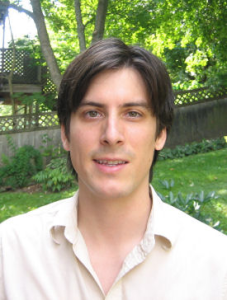
Will Shead is an Associate Professor of psychology at Mount Saint Vincent University. He is a Cree member of the Peguis First Nation in Manitoba. Will’s research interests include gambling, risk-taking, and social influence. Will has mentored many students interested in pursuing psychology as a career. He has been recognized for his teaching in 2021, receiving The President and Vice Presidents’ Advanced Career Teaching Award. His capacity for maintaining academic rigor while employing novel and engaging teaching strategies is exemplary, an example being including popular Instagram video series, Psychology Quips, which explain abstract science concepts. He got involved with the Two-Eyed Seeing Program in 2023 because he wanted to learn more about Indigenous ways of knowing, and observe how students from different backgrounds are adopting the two-eyed seeing approach in their educational pursuits.
Sheila Francis
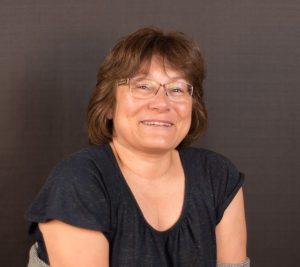
Sheila Francis is the Director of Education for Pictou Landing First Nation, and the Past President of the Pictou Landing Native Women’s Group. She is a founding member of the Two-Eyed Seeing Program. In fact, this program sparked because of her ideas!
Sheila has done extensive research on the environmental health of her community and how it consequently effects the physical health of community members. She has released many publications on this matter and uses Two-Eyed Seeing to conduct research and engage youth.
Cathy LeBlanc
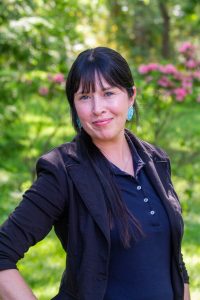
Cathy is from Wasoqopa’q Mi’kmaw Nation (Acadia) and is a graduate of St. Thomas University. She is passionate about connecting Indigenous knowledge, science, storytelling, and learning in ways that encourage people to develop a deeper relationship with the natural world.
Several years ago, Cathy and her colleague, Dave Chapman, began the Mi’kmaw Moons project. Through this work, they explore the connections between Moon cycles, visual astronomy, Mi’kmaw storytelling, and Two-Eyed Seeing. The project creates opportunities to learn from both Mi’kmaw knowledge and Western scientific perspectives, while sharing these teachings with others.
Cathy also brings a strong passion for walking and the outdoors. She served as the Mi’kmaw Walking Program Coordinator with Hike NS, helping create opportunities for people to connect with land, community, culture, and one another through walking.
Adrian M. Downey
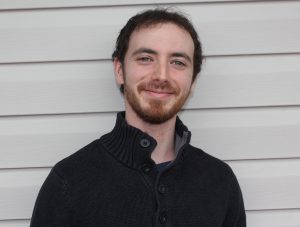
Adrian M. Downey is an associate professor in the faculty of education at Mount Saint Vincent University. He was a member of the Qalipu Mi’kmaw First Nation (QMFN) between 2012 and 2018. Today, he remains connected with QMFN through familial bonds. His research and teaching are focused in the areas of philosophy of education, curriculum studies, and Indigenous education. He is specifically interested in emotion, subjectivity, and decolonial theory in education. Much of his writing attempts to bring Indigenous and non-Indigenous thinking together in conversation (i.e., Etuaptmumk; two-eyed seeing).
Holly Meuse
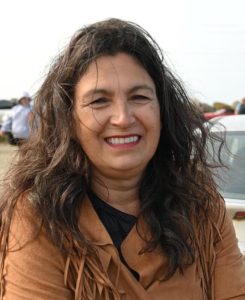
Kwe’ my name is Holly (Qali), and I am a Mi’kmaw community member from L’sitkuk First Nation. I have three awesome sons and the privilege of caring for a beautiful little girl. I have taught Indigenous Knowledge at Mount Saint Vincent University while working on my PhD. I am also a Mi’kmaw artist, a Civil Justice of the Peace, a Firearms Instructor, and a registered social worker for the province of Nova Scotia. I enjoy gardening, softball, hiking, beekeeping, and chilling with family and friends.
Ashley Copage
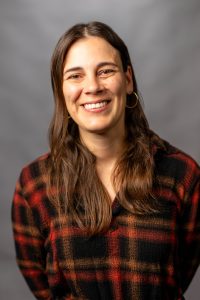
Ashley is from Sipekne’katik First Nation and currently lives in the town of Shubenacadie with her partner and two children. She is an Assistant Professor in the Faculty of Education at MSVU and a current student in the Inter-University Doctoral Program in Education at MSVU, Acadia, & St.FX. Her research focuses on Mi’kmaw pedagogy, storytelling, land-based learning, Etuaptmumk (Two-Eyed Seeing), and research creation through basketry. Ashley has previously worked for the Confederacy of Mainland Mi’kmaq, the NS Department of Education and Early Childhood Development, Clean Foundation, and the Atlantic Council for International Cooperation. Ashley was a part of the TES program in the 2017/2018 year as an undergraduate student and is excited to be returning to the program in a new role!
Jillian Ruhl
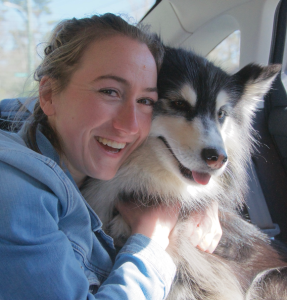
Jillian Ruhl is a Registered Dietitian who works in the Department of Applied Human Nutrition at Mount Saint Vincent University as a Laboratory Instructor and Faculty Supervisor for students in the Internship Education Program and Food and Nutrition Practicum Program. She also oversees the campus Community Garden and spearheaded the campus beehives (2017-2024) and hens (2024-present) which will be reopening in the 2027/2028 season. Before attaining her Master of Science in Applied Human Nutrition and becoming a Registered Dietitian, Jillian worked as a Chemical Analyst in environmental sciences and later supervised in the Nutrition and Food Services department at Nova Scotia Health. As an avid forager, gardener, and steward of nature, her main interests surround the provision of food from the ground up. Her thesis focused on the use of wild edible plants in food tourism, exploring the value of hyperlocal, land-based foods used by business owners and their practices. Jillian is devoted to helping learners achieve the best educational experience possible in their journey of becoming fulfilled professionals. Her greatest teaching achievement is training her dog to sing half an octave!
Past Leadership Team
Velvet Paul
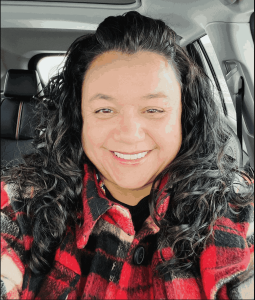
Shannan Grant
Janice Francis
Shane Theunissen