The latest MSVU recipients of Natural Sciences and Engineering Research Council (NSERC) Discovery Horizons and Discovery Grants (DG) – plus Discovery Launch awards for first-time NSERC DG recipients – are generating new knowledge that stands to have long-term and global impacts.
Minister of Industry the Honourable Mélanie Joly noted that “Canada’s greatest competitive advantage is our people. By investing in our world-class researchers and innovators right here at home, we are helping turn Canadian discoveries into new technologies, growing companies, and good jobs.”
MSVU researchers will receive a total of $1.8 million over five years, as follows:
NSERC Discovery Horizons Grant
Discovery Horizons grants support investigator-initiated individual and team projects that broadly integrate or transcend disciplines to advance knowledge in the natural sciences and engineering.
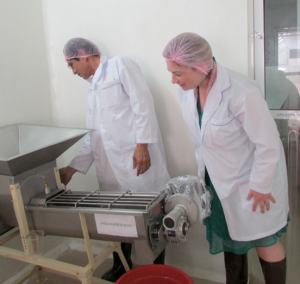 Dr. Kyly Whitfield, Applied Human Nutrition
“Development and assessment of thiamine and iodine co-fortified salt to prevent infantile beriberi in low- and middle-income countries” – $499,344
This research focuses on developing and testing salt that is fortified with iodine and thiamine (vitamin B1) to help prevent nutrient deficiencies among infants in low- and middle-income countries. The goal is to reduce infantile beriberi, a serious and potentially life-threatening condition caused by thiamine deficiency in infants, while also addressing iodine deficiency through a single, widely used food product. The research examines whether this co-fortified salt is effective, safe, and practical for improving maternal and infant health on a large scale. This MSVU-led interdisciplinary project brings together experts from the Cambodian Ministry of Planning, Acadia University, and the University of Toronto.
NSERC Discovery Grants
Discovery Grants support researchers across Canada whose work is the foundation of scientific and technological advances.
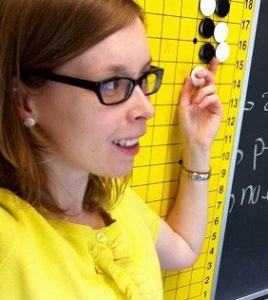 Dr. Danielle Cox, Mathematics and Statistics
“Vertex-Pursuit Polynomials” – $160,000
Graphs can be used to model complex networks, like the internet. Vertex-pursuit problems on graphs can model, given particular resources, the containment or capture of an adversary in a network (for example, a hacker or malware in an internet context). Network reliability is the mathematical study of designing networks that are reliable, given that network failures can occur. In this project, Dr. Cox will introduce a new area of study which, through the study of polynomials, will provide insights into the design of networks where the capture of an adversary is highly probable.
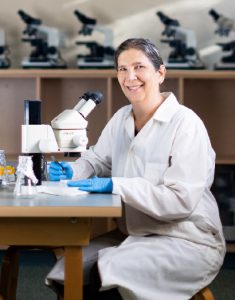 Dr. Tamara Franz-Odendaal, Biology
“Early Development of the Ocular Skeleton” – $390,000
Understanding the fundamental triggers and processes involved in development of the ocular skeleton in animal models will enable Dr. Franz-Odendaal and her team to more fully understand why some animals, like mammals (including humans), don’t develop these skeletal supports for the eye while others, such as reptiles, do. This research falls within the field of Evolutionary-Developmental Biology and encompasses anatomy, embryonic development, and cellular dynamics within tissues.
 Dr. Michael Land, Chemistry and Physics
“Phosphorus Ligands for Electronic Control in Coordination and Main-Group Chemistry” – $217,500
This research will develop tools to rapidly understand how molecules are structured and how they react, providing new insights into chemical bonding and the development of advanced materials. It will also support the rapid identification and separation of Canada’s critical minerals, which are essential to many modern technologies, while providing valuable research and training opportunities for MSVU students.
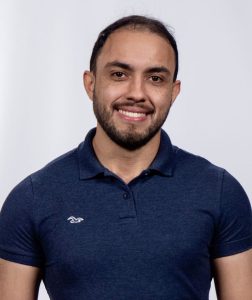 Dr. Dhésmon Lima, Chemistry and Physics
“Next-generation nanostructured electrochemical platforms for environmental and bioanalytical sensing” – $187,500
Contaminants including pharmaceuticals, algal toxins, and plastic-related chemicals are increasingly being detected in Canadian waterways. This research aims to develop low-cost electrochemical sensors that can quickly detect emerging contaminants in water. Using nanomaterials and biological molecules, the sensors convert pollutants into measurable electrical signals. This work will also investigate the potential biological effects of these contaminants while providing training opportunities for student researchers. By combining chemistry, nanotechnology, and biochemistry, this work aims to contribute to more accessible tools for water-quality monitoring while advancing our understanding of electrochemical sensing and biosensing.
NSERC PromoScience Grant
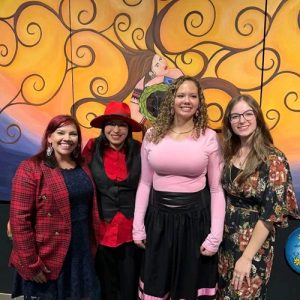 Earlier this year, the Two-Eyed Seeing (TES) Program received NSERC PromoScience funding valued at $337,800 for a fourth three-year term and marked its 10th anniversary. The TES program is currently led by MSVU English Professor Dr. Krista Collier-Jarvis (who is Mi’kmaw), in partnership with communities. Cheyenne Hardy is the Program and Communications Coordinator.
With guidance from Elders, Knowledge Keepers, community partners, and academic researchers, the program co-creates learning opportunities in STEAM (Science, Technology, Engineering, Arts, and Math) with and for Mi’kmaw youth in Mi’kma’ki. Two-Eyed Seeing (Etuaptmumk in Mi’kmaq), refers to seeing the world through Indigenous and Western perspectives, together.
You can read more about the TES Program’s NSERC PromoScience funding and special anniversary here.
Congratulations to these latest NSERC grant recipients!