Walk into a classroom and ask who should belong in science. The answer, Dr. Eddia Solas has learned, depends entirely on where in the world you’re standing.
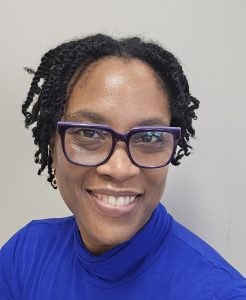
An Associate Professor in the Faculty of Education at Mount Saint Vincent University, Dr. Solas has spent her career examining what science education looks like across cultures and who gets left out when teaching ignores the communities it’s meant to serve.
A Journey Across Continents and Classrooms
With a doctorate in chemistry and teaching experience spanning Jamaica, Trinidad, the United Arab Emirates and Canada, Dr. Solas has worked at six universities across multiple regions. That experience has given her a perspective on education that few can match.
When she arrived in Canada just before the wave of social reckoning that followed the death of George Floyd, she found herself observing something she hadn’t encountered before: systemic barriers to science learning for Black students. Coming from Jamaica, where she had earned her PhD in chemistry in her mid-twenties surrounded by peers who looked like her, the idea that race or gender would be seen as obstacles to scientific achievement was genuinely foreign to her.
“It never occurred to me that anyone would think that as a woman, I couldn’t learn science, as a Black person, I couldn’t learn science, because that was not my experience,” she said. “Coming here and seeing some of what was going on made me start taking a deeper look.”
Research Rooted in Real Classrooms
That deeper look has become the foundation of Dr. Solas’s research, which sits at the intersection of science education, cultural responsiveness and language. Her work asks a deceptively simple question: what gets in the way of students learning science, and how do we remove those barriers?
Dr. Solas noticed that classrooms in different regions carry very different assumptions about what learning looks like. In some cultures, a student calling out an answer – “Pick me, I know it!” – is a sign of engagement and enthusiasm. In others, that same behaviour is read as disrespectful. For immigrant students, those mismatched signals can mean being overlooked entirely.
“The implications for students who are coming from a place where ‘I’m excited about it, pick me’ is that they are ignored or overlooked because they aren’t behaving in a way the teacher understands,” she said.
Her current research projects include developing a repository of culturally responsive science materials for pre-service teachers, studying the practices of science educators who have demonstrated success teaching students of African heritage and examining how culturally responsive pedagogy from Black-majority countries can inform teaching practice in Canada.
She has also authored a children’s book – a bilingual English-French biography of a scientist of African Nova Scotian heritage, available through the Nova Scotia School Book Bureau. Co-created with B.Ed. student Leena Elkhateeb, a pre-service teacher who illustrated the work, the book Building Dreams: The inspiring story of Shalyn Williams is part of a broader effort to ensure young Black students see themselves represented in science long before they reach senior grades.
Building the Next Generation of Teachers
Beyond her teaching and research, Dr. Solas serves as Director of Teacher Education at MSVU, overseeing the Bachelor of Education program and introducing a new 14-month pathway to help address the increased demand for teachers in Nova Scotia.
She is particularly passionate about supporting internationally educated teachers navigating provincial certification requirements, drawing on her own experience arriving in Canada as an outsider to a new system.
“We need diversity in our staff rooms to match the diversity in our classrooms,” she said.
For Dr. Solas, teaching and research are inseparable. Whether she’s working with pre-service teachers, collaborating with colleagues across three continents, or writing books for grade school classrooms, the goal is the same: to make science a place where every student can see themselves, and succeed.
And MSVU, she says, is a place that gets that. Small in size but expansive in reach and reputation, it’s an institution she has come to genuinely love. She was struck early on by how many people she met – from her home community in rural Jamaica through to her graduate instructors at the University of Toronto – who had their own connections to the university.
“So many people have been to the Mount, so many people are connected from all over – places that you wouldn’t expect,” she said.
For someone who has built her career on the idea that community matters and belonging is the foundation of learning, it seems like the right place to land.