The Indigenous-Black-International Science (IBIS) student assistantship program at MSVU provides paid research opportunities in Chemistry, Biology, Physics, Math, Applied Human Nutrition, and Psychology for undergraduate students who are Indigenous, Black and/or international.
Launched in 2022 by Biology Professor and then NSERC Atlantic Chair for Women in Science and Engineering Dr. Tamara Franz-Odendaal, 28 students have taken part in the program since its inception, most gaining their first research experience. Students gain up to 30 weeks experience (spread over two semesters) working under the guidance of faculty, developing experiments, conducting lab procedures, learning new lab techniques, and collecting and analyzing data.
“This program removes several barriers for students to access research opportunities. It removes the barrier of having to approach and connect with a faculty member, and it does not depend on high grades,” notes Dr. Franz-Odendaal. “The application process is very simple for students and for faculty.”
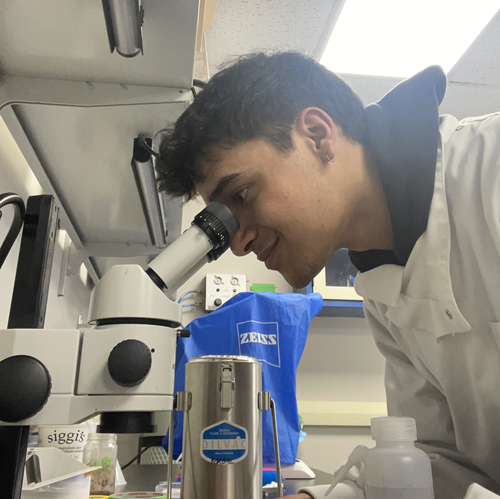
Students awarded the IBIS Assistantship also have the opportunity to network with other students in the IBIS program, with the potential for faculty mentorship to continue beyond the program. Past participants have noted that the program has enhanced their communication and technical skills, expanded their interest in other topics outside of their own research interests, and – most importantly – taught them that they belong in STEM research spaces.
“I never envisioned myself enjoying lab work as much as I have. Through the IBIS program, I developed the skills, confidence, and motivation to pursue future opportunities in research,” says Bryson Thomas, a current IBIS student assistant. “Working as a member of a research team has been one of the most rewarding experiences of my undergraduate degree, I have developed research skills through the IBIS program which have helped me secure opportunities for after I graduate.”
Examples of current projects that students are working on include Optimizing the laboratory rearing conditions of diverse ladybeetle species with Biology Assistant Professor Dr. David Adwe, Graphical analysis of health care data using RStudio and ggplot with Mathematics and Statistics Professor Dr. Gary Sneddon, and Supporting Electrochemical Detection of THC through Laboratory Skills Development and Research Communication with Chemistry Assistant Professor Dr. Dhesmon Lima.
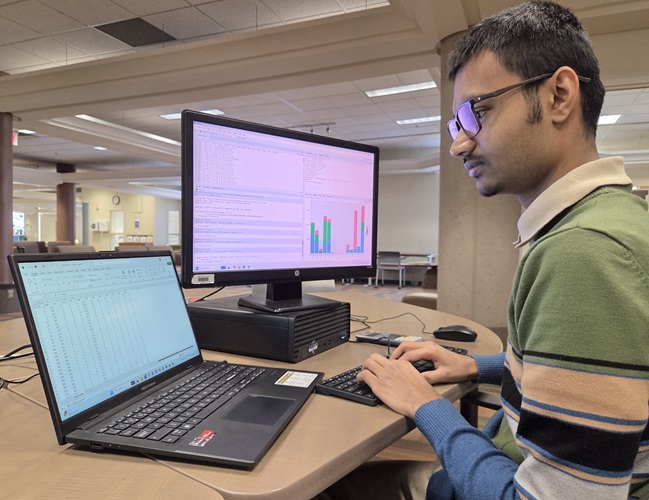
Faculty supervisors have also highlighted the program’s value in giving students exposure to research environments. Whether students continue in the same field once the program ends or continue to graduate studies, the experience gained in IBIS helps build a strong foundation in research methods which will be valuable in many areas of their future careers.
There are currently six students enrolled in the 2025-26 cohort, assisting with research projects in Psychology, Biology, Chemistry, and Mathematics.
Applications for the 2026-27 Fall/Winter cohort will open in early fall.