
Canada Research Chairs
In 2000, the Canada Research Chairs Program was launched by the Government of Canada to promote leading-edge research and innovation in Canadian universities and to attract and retain the world’s best researchers. Currently, Mount Saint Vincent University (MSVU) hosts four Canada Research Chairs.
The Mount’s Strategic Research Plan for the Canada Research Chairs Program provides an overview of the main research directions of MSVU. The goal of all Canada Research Chairs is to advance the frontiers of knowledge within their fields, not only through their own research, but also by coordinating research efforts of other researchers within their discipline. MSVU currently has four Canada Research Chairs.

Dr. Zachary Zimmer, Professor – Family Studies and Gerontology
Tier 1 Canada Research Chair in Global Aging and Community
Dr. Zachary Zimmer holds a Canada Research Chair in Aging and Community and is the Director of the Global Aging and Community Initiative. In his career, he has taught courses in demography, ageing, health policy, research methods, and statistics.
Dr. Zimmer’s research focuses on global issues in health and general well-being of older persons, studied from a demographic perspective. Much of his work has taken place in East and Southeast Asia where population ageing and socioeconomic change has been swift and where older adults face many obstacles related to the changing nature of their social environment.
 Dr. Jessie-Lee McIsaac – Associate Professor – Faculty of Education and Department of Child and Youth Study Tier II Canada Research Chair in Early Childhood: Diversity and Transitions
Dr. Jessie-Lee McIsaac is an Assistant Professor and Tier II Canada Research Chair in Early Childhood: Diversity and Transitions with the Faculty of Education and Department of Child and Youth Study at Mount Saint Vincent University. She is the Director of the Early Childhood Collaborative Research Centre and is the Principal Investigator of the centre’s projects.
The goal of Dr. McIsaac’s work is to ensure policy and practice are in place to support families across different early learning environments. She established three pillars for the centre: (1) population-level evaluation, (2) leverage family voice, and (3) knowledge mobilization. Her key areas of focus are high-quality, inclusive and culturally-responsive early childhood, child well-being through (a) responsive feeding, (b) social and emotional learning, (c) outdoor play, and building connections for early childhood development.
Dr. McIsaac holds grants from the Canadian Institutes of Health Research (CIHR), the Social Sciences Humanities Research Council (SSHRC) and the Margaret and Wallace McCain Family Foundation. She also partners with various organizations such as Immigration Services Association of Nova Scotia (ISANS) and Nova Scotia Early Childhood Development Intervention Services (NSECDIS).
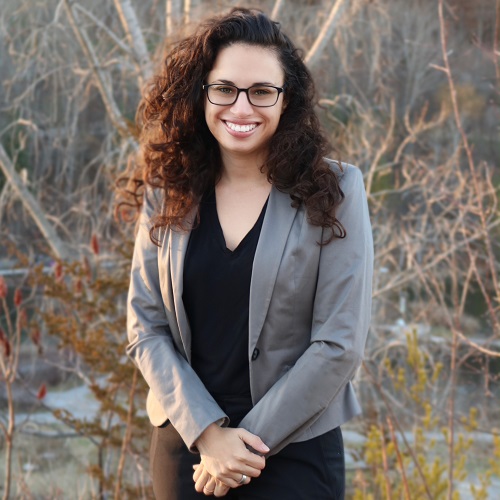
Dr. Jennifer Khoury – Assistant Professor – Department of Psychology
Tier II Canada Research Chair in Interdisciplinary Studies in Neuroscience
Dr. Jennifer Khoury holds a Ph.D. in Clinical Psychology and an M.A. in Clinical Psychology, both from Ryerson University, and a B.Sc. in Psychology (Honors) from the University of Toronto. After obtaining her Ph.D., Dr. Khoury completed postdoctoral fellowships at Harvard Medical School/Cambridge Hospital (2017-2019) and at the Offord Centre for Child Studies at McMaster University (2019-2020).
Dr. Khoury has been involved in a number of federally funded neurobiological, developmental, and clinical projects in both Canada and the United Stats, and her work has received national recognition. Recently, Dr. Khoury received a Social Sciences and Humanities Research Council of Canada (SSHRC) Insight Development Grant to examine the developmental outcomes associated with child maltreatment. Dr. Khoury has also been awarded highly competitive scholarships and fellowships, including the Canadian Institutes of Health Research (CIHR) Postdoctoral Fellowship. Dr. Khoury’s research has resulted in numerous peer-reviewed publications and national and international conference presentations. Dr. Khoury leads the Developmental Psychobiology Research Centre.